13 min read
Quick answerRelocating an aircon is a technical job for a qualified technician: refrigerant must be recovered, lines vacuumed and recharged, and electrics safely reconnected. In Johannesburg a typical move costs around R3 500-R4 500, depending on distance and access.
Relocating an aircon across Johannesburg is a technical job - done wrong, it can leave you with a damaged system or a big repair bill.
Aircon relocation is not a DIY weekend job. It involves electrical work, refrigerant handling and careful planning to avoid leaks or inefficiency.
When you move an air conditioner, the risk to performance is real. Poor handling can reduce lifespan, cause faults, or leave rooms poorly cooled.
At airconditioning-johannesburg.co.za we connect you with local contractors who understand Johannesburg cooling needs. Like the rest of our library of aircon guides, this page explains factors such as unit type, room size, access and energy use so you can request quotes with confidence.
By choosing the right service, you protect your comfort and keep moving air smoothly through your rooms. Our platform helps you find qualified professionals who manage the technical steps of relocation and conditioning without guesswork.
Quick Facts & Key Takeaways
- Access is often the biggest price swing - stairs, roof work or a tight façade can lift labour from low to very high.
- Have a technician test refrigerant levels and electrical safety before you decide to move or replace.
- For older or fault-prone units, a new install can beat the cost of moving - weigh it against current aircon prices.
- An uncertified move can void the manufacturer’s warranty.
- Confirm SAQCC Gas registration and request up to three written quotes on our platform.
Table of contents
Table of contents13 min read
What moving an aircon really involves
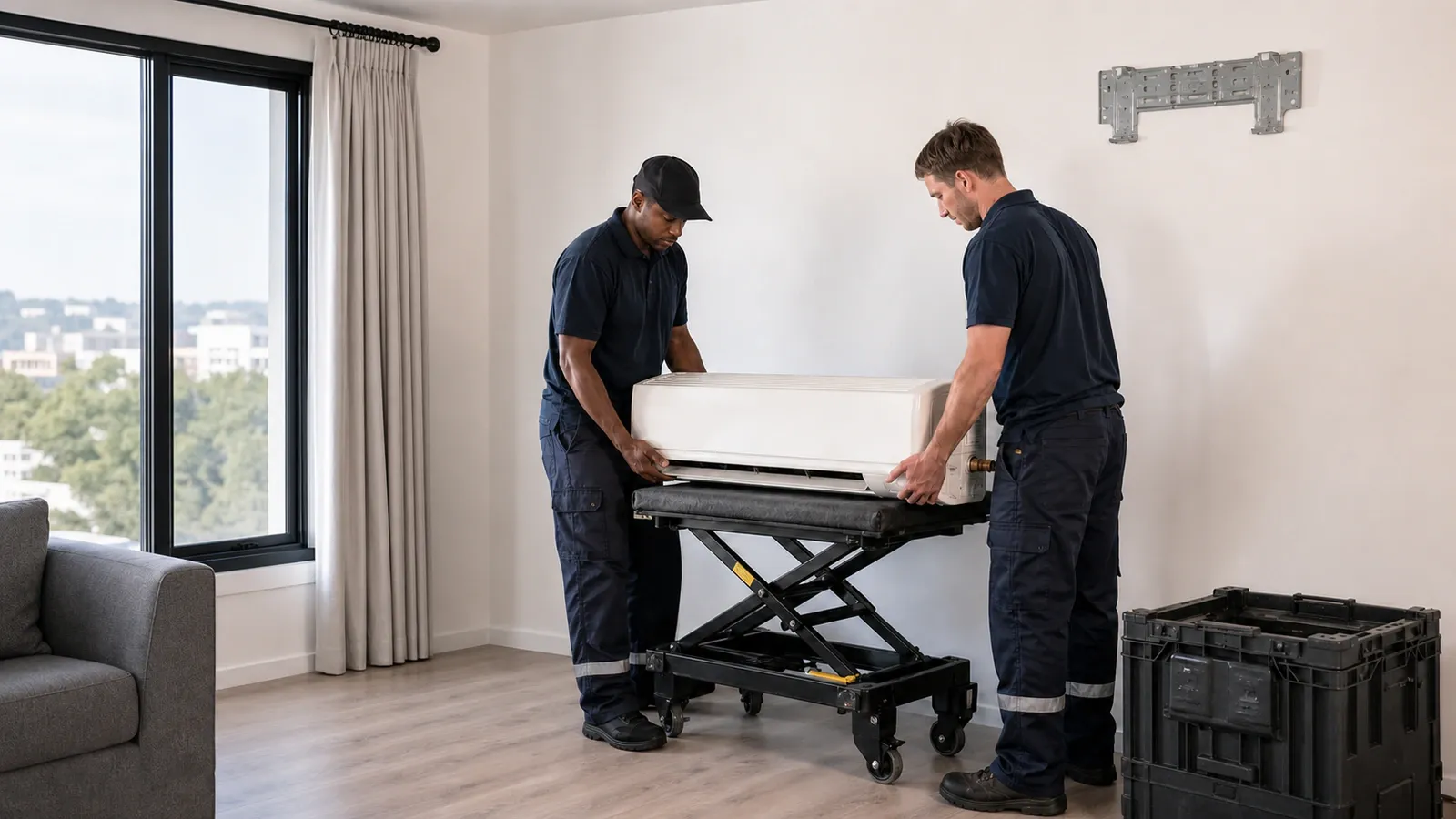
Shifting your cooling system in Johannesburg needs more than a quick move. Local rules sometimes demand repositioning for safety or legal compliance, so planning must include council and building checks.
Property owners in Sandton, Randburg and Roodepoort often call a professional service when renovating. Whether you are in Fourways, Midrand, the CBD or JHB South, we link you to local experts who know regional air conditioning needs.
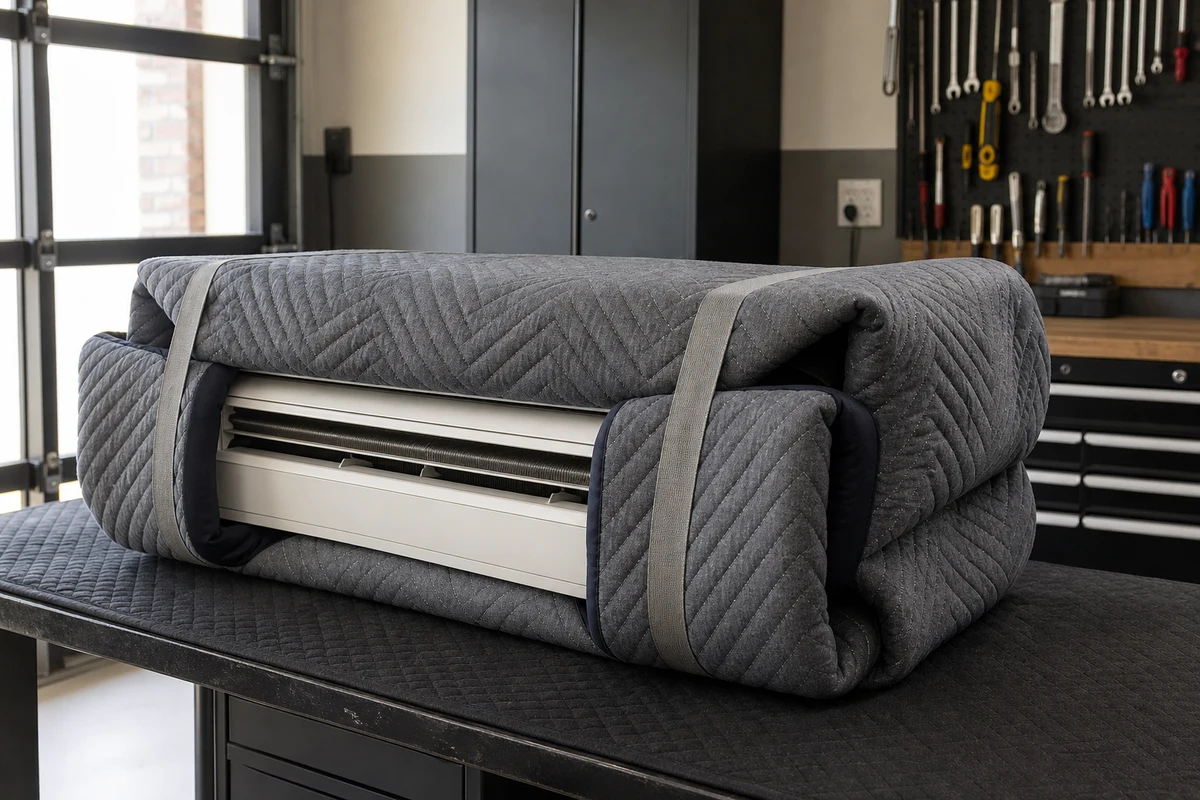
Good planning protects performance. A professional team prevents common faults such as refrigerant leaks or electrical issues. They also assess access, mounting, and energy use so the system works well after the move.
- Local contractors understand Johannesburg building styles and ventilation challenges.
- Proper relocation planning keeps rooms comfortable through seasonal changes.
- Our platform helps you find independent contractors and request quotes with confidence.
| Area | Common Need | Typical Concern |
|---|---|---|
| Sandton | Renovation repositioning | Access and façade rules |
| Midrand | New builds and sizing | Ventilation and energy use |
| CBD / JHB South | Commercial adjustments | Service access and permits |
Should you move the unit at all?
Deciding whether to move a cooling unit starts with a clear assessment of age and wear. A local technician should inspect your air conditioner to judge life expectancy, visible damage and recent repairs.
Check the unit’s age and wear
Older units, especially those that sit in direct sun, often have brittle plastic parts. These components can crack during removal and cause further damage.
Frequent repairs or odd noises are key signs the system may be near the end of its useful life. In that case, a replacement may be a better long-term investment.
When Replacement Outweighs Relocation
Compare the cost and time of moving the conditioner against a new installation; checking current aircon prices helps you judge whether a replacement makes more sense. New units offer better performance, warranties and energy savings.
- Get a technician assessment before you decide; they can test refrigerant levels and electrical safety.
- If your equipment still requires regular repairs, replacement often reduces future expense and downtime.
- Note: some brands keep warranty cover only if an approved, qualified contractor performs the move.
We recommend weighing immediate costs, long-term performance and warranty impact so you make the best choice for your home.
The tricky parts of a move
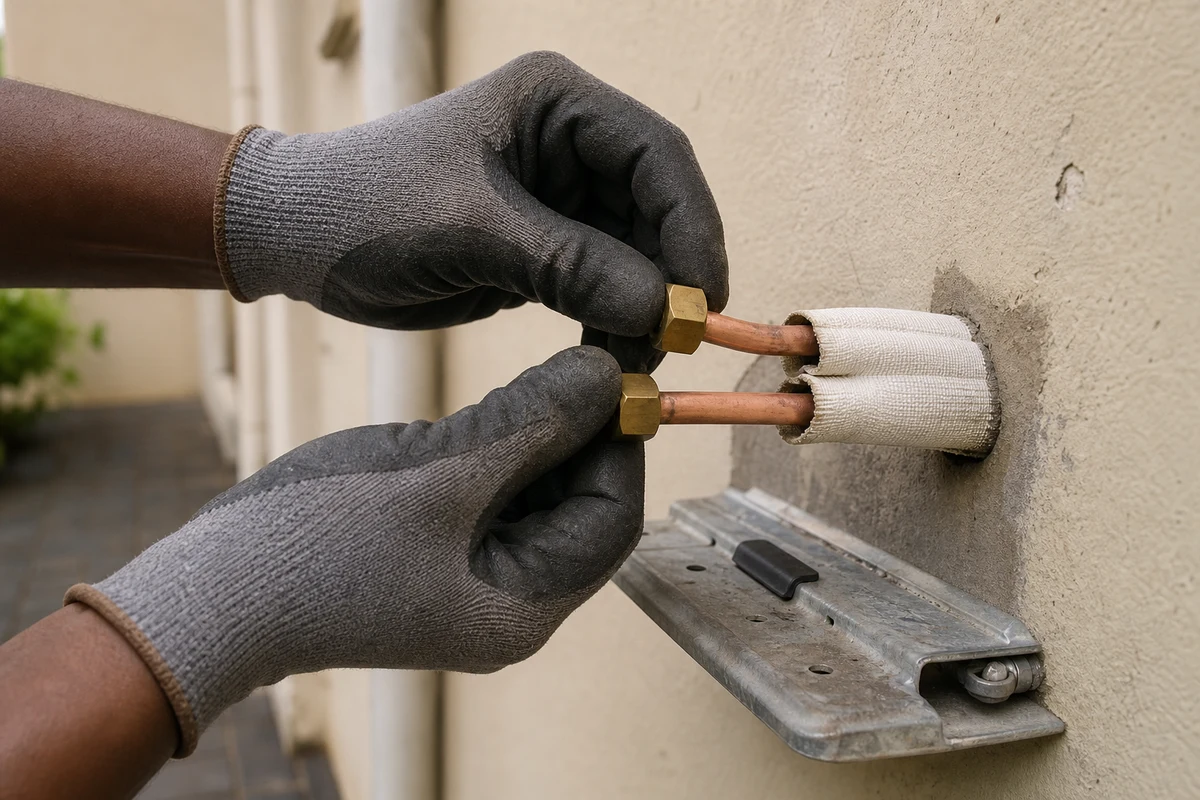
The most delicate part of a move is managing the sealed refrigerant circuit without contamination. Before any physical work starts, a qualified technician isolates power and prepares tools to protect the system and people.
Managing refrigerant and electrical components requires trained technicians who follow legal aircon regas procedures. The refrigerant is first pumped into a certified storage tank to avoid leaks and environmental harm.
After reinstallation, teams vacuum moisture from the lines, recharge the correct refrigerant charge and run a full system test. These steps reduce the risk of future faults and keep performance within expected limits.
- Recover refrigerant safely to a storage tank to prevent environmental damage.
- Inspect electrical components and reconnect power per local codes.
- Vacuum lines to remove moisture, then recharge and test the system.
- Check all components for movement damage and correct mounting.
| Stage | Key Action | Outcome |
|---|---|---|
| Pre-disconnection | Pump refrigerant into storage tank; isolate power | Safe handling; no leaks |
| Reinstallation | Vacuum lines; recharge refrigerant | Correct cooling and energy use |
| Final test | Full system run; electrical safety check | Verified performance; reduced issues |
What a relocation costs
Costs for shifting a split system vary widely and hinge on simple facts like access and unit size. In Johannesburg, contractors price work by considering unit type, room dimensions and BTU capacity.
Labour, parts and the urgency of your request all change the final quote. If the technician finds existing faults, you should expect extra repair work to be itemised.
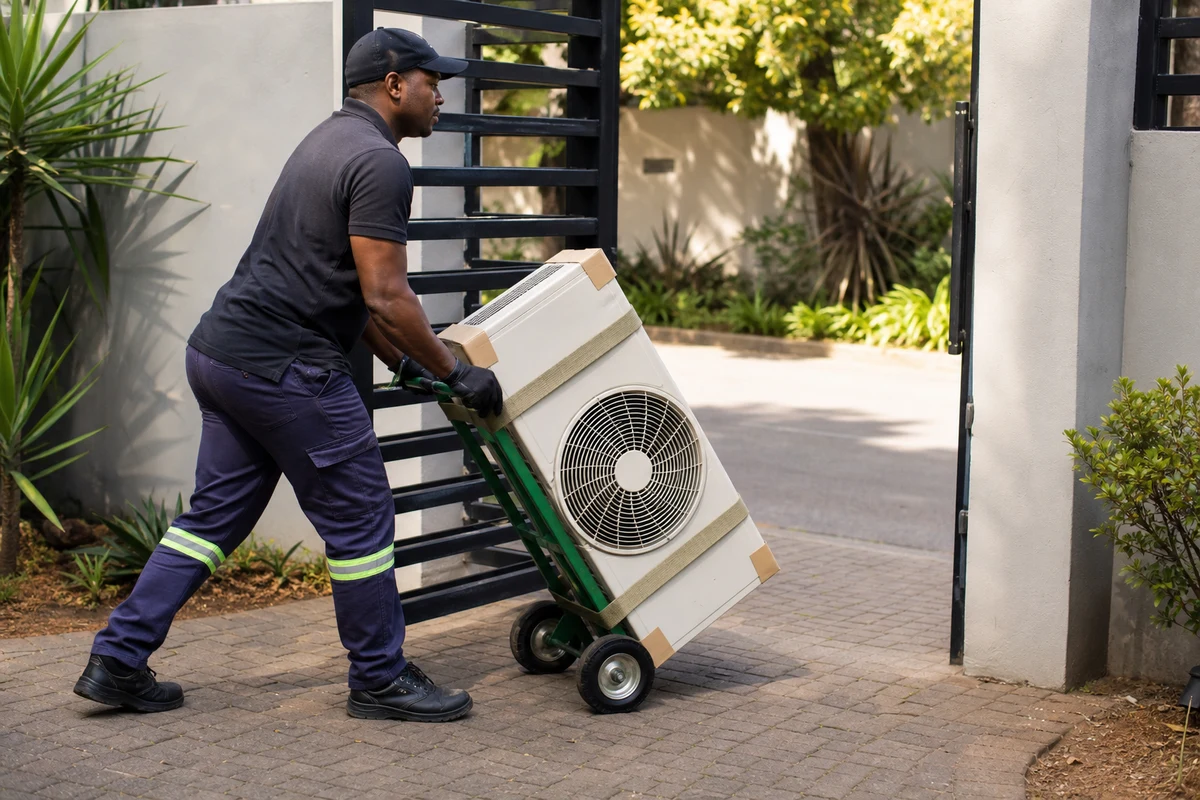
Distance and access matter. Carrying an outdoor unit up narrow stairs or routing new pipework through a complex façade increases time and cost. Brands and specialised parts can also add to the bill.
- Typical relocation quotes fall around R3 500 - R4 500 depending on distance and complexity.
- Provide the brand, system age and symptom details during assessment for a better quote.
- Contractors factor safety steps, testing and any replacement parts into their pricing.
Give detailed information when you request quotes. This helps independent contractors on our platform produce accurate estimates and reduces surprises on the day of work.
| Cost Driver | What contractor checks | Likely effect on price |
|---|---|---|
| Unit size / BTU | Cooling capacity and mounting needs | Medium to high |
| Access | Stairs, lifts, roof work, façade access | Low to very high |
| Faults / repairs | Leaky lines, electrical faults, worn parts | High |
| Distance moved | Labour time and transport | Low to medium |
Picking a spot that cools well
Choose a new location that helps your cooling system work without fighting heat from nearby walls or roof surfaces. This preserves performance and keeps energy use lower over time.
Where to place the indoor unit
Place the indoor unit where it can move air across the room without obstruction. Avoid corners, direct sunlight or spaces behind tall furniture.
Balanced distribution prevents cold spots and reduces the load on the system.
Outdoor Unit Ventilation
The outdoor unit needs clear airflow and service access. Give several centimetres of clearance on all sides and avoid tight ducts or enclosed cupboards.
- Sufficient ventilation prevents heat build-up and mechanical damage.
- Easy access reduces costs at future maintenance and installation visits.
Drainage Requirements
Ensure condensate pipes slope correctly to a safe waste point. Poor routing can cause water stains, ceiling or wall damage and extra repair costs.
Mount level and secure to stop vibration and improve long-term performance.
How to request relocation quotes
Provide simple facts about your system, site access and symptoms so local contractors can prepare realistic quotes. At airconditioning-johannesburg.co.za we make it straightforward to request up to three quotes from independent installers.
What you enter matters: unit type, room size, preferred new location, any visible faults and access notes. These details help contractors price the aircon installation, regas and any necessary parts or labour.
After you submit the form, independent contractors assess the information and send tailored offers. Compare the scope, warranty terms and timelines to judge value.
- Browse guidance on installation, regas and current aircon prices to inform your choice.
- Receive up to three professional quotes and check each for included testing and parts.
- Contact contractors directly to confirm availability, permits and final site inspection.
Start now: use our simple contact form to “Get an aircon relocation quote” and connect with reliable local services. Remember, our platform links you to contractors; it does not perform the work itself.
Servicing right after the move
Once the unit is reinstalled, it helps to know what to expect from a professional installation so you can confirm the work was done properly. Arrange a full service to check the system works as expected and to reduce future costs.
Keeping it running well long-term
A qualified technician should check refrigerant levels and advise on regas implications if the charge is low. Correct regassing protects the environment and restores cooling performance without hidden faults.
Inspect filters and internal components regularly. Clean filters keep the air flowing and improve energy use.
Watch for unusual noises, water leakage or a drop in cooling. Report these issues promptly to avoid larger repairs and reduced life expectancy.
- Electrical and drainage check: ensure connections, condensate pipes and mounts are secure after the move.
- Service interval: schedule professional maintenance at least once a year to limit emergency work and costs.
- Proactive care: simple cleaning and timely repairs preserve performance and comfort through Johannesburg heat.
Before you move your aircon
Start with a professional assessment to keep your cooling investment safe and efficient.
Moving your aircon relocation or an air conditioner needs planning, correct refrigerant handling and a clear service plan.
Choose experienced technicians who protect seals and pipes to avoid water leaks, poor cooling and excess heat in rooms.
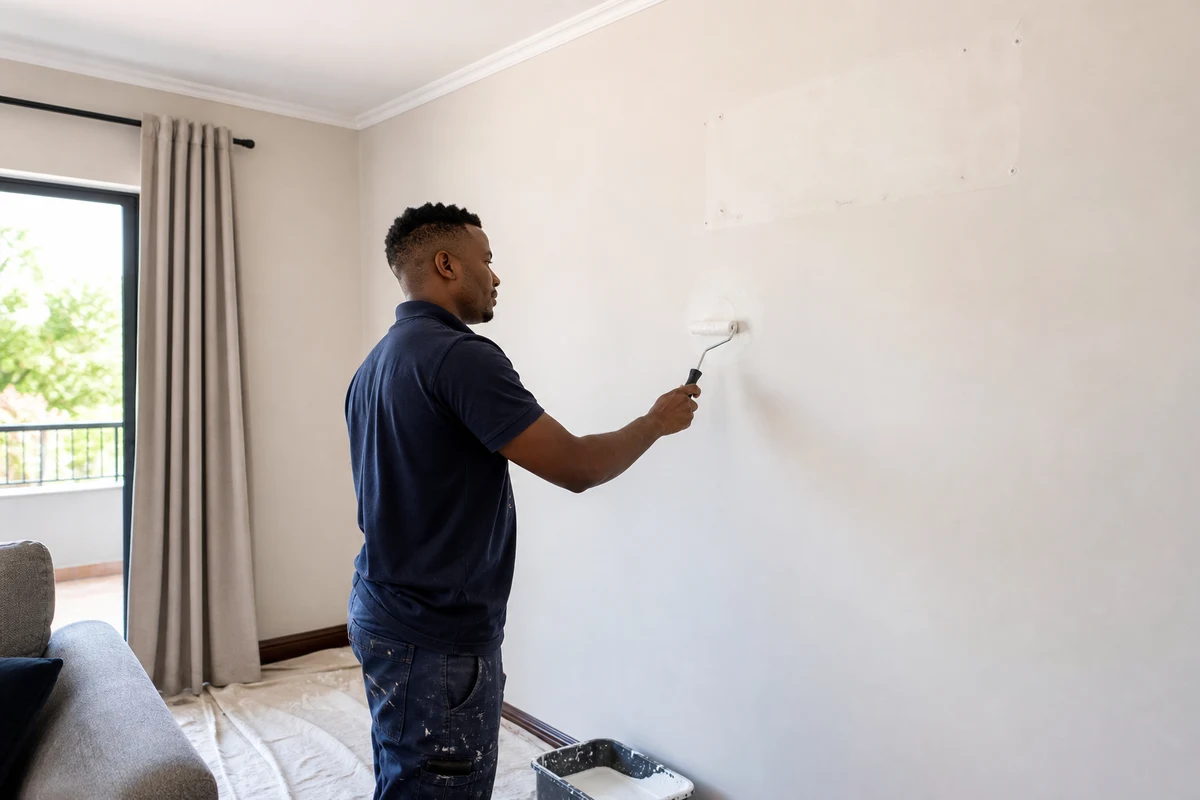
Regular maintenance and timely checks restore efficiency and protect long-term performance of your conditioner and other systems.
Our platform connects you with local installers who quote on access, parts, labour and conditioning work so you can compare offers with confidence.
Thank you for trusting our guidance as you move towards a cooler, more efficient home in Johannesburg.
FAQ
What does relocating or moving an aircon involve?
Relocating or moving an aircon involves safely disconnecting the indoor and outdoor units, recovering refrigerant, rerouting or replacing refrigerant lines, electrical wiring and drainage, and reinstalling the units in a new location. Technicians test for leaks, recharge the system to the correct refrigerant charge, check airflow and electrical safety, and verify system performance before handing the job back to you.
How do I know if moving my air conditioning unit in Johannesburg is a sensible choice?
Consider the unit’s age, overall condition, cooling performance and energy use. If the system is less than 8-12 years old, has no major faults and meets your room-size cooling needs, moving can be practical. If you see frequent faults, high power bills, or the compressor is failing, replacement may be more cost-effective.
What local factors in Johannesburg affect an aircon move?
Local factors include property access (stairs, lifts, driveways), outdoor unit siting rules, municipal bylaws, prevailing temperature ranges and dust levels which affect filtration needs. Availability of qualified technicians and parts in Johannesburg can also influence timing and cost.
How do technicians evaluate the unit age and condition before moving it?
Technicians inspect compressor operation, cabinet corrosion, fan motors, coil condition, refrigerant pressure and cooling output. They check electrical components, look for oil or refrigerant leaks and assess whether the piping and mounting can be reused safely. This inspection helps decide if the unit should be moved or replaced.
When does replacement outweigh relocation?
Replacement usually makes sense when the unit is near end of typical life (often over 10-12 years), requires repeated repairs, uses obsolete refrigerant, or is undersized for the new space. Also consider energy efficiency gains from a modern system and long-term running costs.
What technical challenges can arise during the relocation process?
Common challenges include damaged or undersized refrigerant lines, corroded electrical connections, inaccessible roof or balcony locations, need for new mounting brackets, and dust or water ingress points. Technicians may find blocked drainage or poor outdoor unit ventilation that require rectification.
How are refrigerant and electrical components managed during a move?
Refrigerant is recovered into specialised cylinders to meet legal and safety rules, then recharged to exact manufacturer specifications after reinstallation. Certified electricians isolate and label wiring, install appropriate circuit protection if needed, and test voltage and earthing. Only qualified technicians should handle these tasks.
What factors influence the cost of relocating my air conditioning unit?
Costs depend on distance between old and new locations, difficulty of access, need for new piping or cabling, whether mounting brackets or concrete pads are required, refrigerant top-up, labour time and any required repairs. Local labour rates and parts availability in Johannesburg also affect the final price.
How do I choose an ideal new location for the indoor unit to ensure efficiency?
Place the indoor unit where it can distribute air across the room without obstruction, away from direct sunlight and heat sources, and where the return airflow isn’t blocked. Consider room size, furniture layout and thermostat placement so the system cycles correctly and maintains comfort efficiently.
What should I consider for the outdoor unit ventilation and siting?
The outdoor unit needs clear airflow around the condenser, ideally 300-600 mm clearance on sides and more above. Avoid enclosed cupboards, dusty spots, or locations that trap hot exhaust air. Secure a flat, vibration‑isolating base and ensure easy access for servicing.
Are there specific drainage requirements when moving an air conditioner?
Yes. The condensate drain needs a continuous fall to a suitable discharge point and must be insulated where exposed to prevent algae or freezing in colder months. Technicians may install new drain lines, traps or condensate pumps if gravity drainage isn’t possible.
How does the quote process work when requesting local contractors through this platform?
You can request up to three quotes, or up to five where available, from independent contractors serving Johannesburg. Contractors will typically ask for unit type, room size, photos of existing and proposed locations, and access details. They provide written quotes showing parts, labour, refrigerant, and any warranties. Independent contractors set prices, timelines and guarantees.
What should I check on the written quote before approving work?
Verify scope of work (disconnection, piping, electrical, reinstallation, refrigerant recovery/recharge), brand and model compatibility, itemised parts and labour, warranty terms, insurance proof and any access or scaffold costs. Check whether the quote includes testing and commissioning and ask for a completion report.
What essential maintenance is recommended after moving my unit?
Schedule a service within 3 months to confirm refrigerant charge and airflow, clean or replace filters, inspect drain lines, check electrical connections and verify thermostat calibration. Thereafter use a routine maintenance plan - typically annual servicing - to maintain performance and energy efficiency.
How can I ensure long-term system performance after relocation?
Keep filters clean, maintain clear airflow around indoor and outdoor units, inspect drain lines for blockages, and arrange regular servicing with a qualified technician. Monitor energy use and unusual noises; early repairs prevent larger failures and extend system life.
How long does a typical move take and what causes delays?
A straightforward move can take a few hours; complex jobs involving long pipe runs, scaffold access, electrical upgrades or structural works can take a day or more. Delays occur from unavailable parts, unforeseen corrosion, access restrictions, or weather that affects external works.
Will moving my air conditioning unit affect its warranty?
Possibly. Manufacturer warranties may be voided if uncertified technicians perform work or if the system is altered beyond specified limits. Always check the warranty terms and use qualified, certified technicians to minimise risk.
What practical steps should I take before technicians arrive to move the unit?
Clear access to both indoor and outdoor locations, remove obstructions or fragile items, provide safe power isolation if requested, and ensure pets and children are kept clear. Have relevant documentation (installation manual, model number) and photos ready to speed the quote and inspection process.
Ready to request quotes?
Submit a request and independent local air conditioning installers in Gauteng may respond with their availability and pricing. No obligation to accept any quote.
Request Free Quotes