
11 min read
Quick answerThis FAQ covers the aircon essentials for Johannesburg: size at roughly 500 BTU per square metre, service at least yearly, keep indoor humidity around 40-60%, and compare written quotes before you book an installer.
Air conditioning FAQs for Johannesburg homes and offices - straight answers on running costs, sizing, servicing, refrigerants and choosing an installer.
Welcome to our platform, where we gather essential Aircon Faqs for Johannesburg property owners. You will find clear guidance about air conditioning options, sizing, and what to check before you request quotes from contractors.
Living in South Africa means wide temperature swings. Good advice helps you choose systems that balance cooling needs, energy use and ongoing maintenance.
airconditioning-johannesburg.co.za connects you with independent contractors who handle sizing, installs, servicing and repairs. We explain common fault symptoms, access needs, parts and labour so you can compare written quotes without pressure.
These short questions and answers aim to simplify your research and give practical next steps. Explore the topics that matter to landlords, managers and homeowners so you can make an informed decision about your indoor climate.
Quick Facts & Key Takeaways
- Rule of thumb: about 500 BTU per square metre, so a 20 m² room needs roughly 10 000 BTU.
- Units over 18 000 BTU often need a dedicated electrical circuit - confirm this at the site visit.
- Setting around 22-23°C and choosing an inverter model reduces compressor cycling and running costs.
- Vacuum or wash filters every few weeks yourself, but leave refrigerant top-ups and compressor faults to a qualified technician.
- Trim running costs with blinds on sun-facing windows, sealed door and window gaps, and timers that avoid cooling empty rooms.
Table of contents
Table of contents11 min read
Aircon basics for Johannesburg homes
Choosing the right solution begins with clear, local information.
Knowing how an air conditioning unit works helps you match a fit-for-purpose option to your home. Units can cool in summer and also warm a room on chilly Johannesburg evenings. This flexibility matters if you want one device for year-round comfort.
Humidity control sits between 40% and 60% for most people. Maintaining that range can ease symptoms for those with allergies and improve home comfort.
- Start with the basics: type of unit, room size and your comfort needs.
- Consider a unit that provides both cooling and heating for seasonal changes.
- Look at filtration, maintenance access, energy use and service history before you request quotes.
| Feature | Why it matters | Quick check |
|---|---|---|
| Cooling & Heating | One unit can serve year-round needs | Confirm heat mode works on test run |
| Humidity Control | Keeps air between 40-60% for health | Ask about dehumidify mode and sensors |
| Service Access | Regular servicing prolongs life | Check clearance for filters and panels |
Sizing a unit for your room
A simple area-based calculation gives a reliable starting point for sizing.
In South Africa use ~500 BTU per square metre as a rule of thumb. For example, a 20 m2 room needs about 10 000 BTUs, while a 50 m2 space typically requires roughly 25 000 BTUs.

BTU Requirements for Optimal Performance
Choose the right BTU rating so the system runs efficiently without short-cycling or excessive wear. An undersized unit struggles to remove heat and raises energy bills.
Conversely, an oversized unit cools quickly but may not remove moisture, harming comfort and indoor air quality.
“Measure first - assumptions cost money and comfort.”
Measuring Room Dimensions and Ceiling Height
Measure floor area and use a standard ceiling height of 2.5-3 metres for initial calculations. Note any large windows, direct sun, or heat-generating equipment; these increase BTU needs.
| Room area (m²) | Approx BTU | Power note |
|---|---|---|
| 20 | 10 000 | Standard outlet OK |
| 50 | 25 000 | Dedicated circuit likely required |
| 36 | 18 000 | Threshold for dedicated power |
- Verify if units over 18 000 BTU need a dedicated circuit for safe installation.
- Ask contractors to factor insulation, glazing and occupancy into final sizing.
- Get written recommendations so you can compare installation and energy figures.
Getting more life and efficiency from a unit
Efficient running keeps comfort high and costs low.
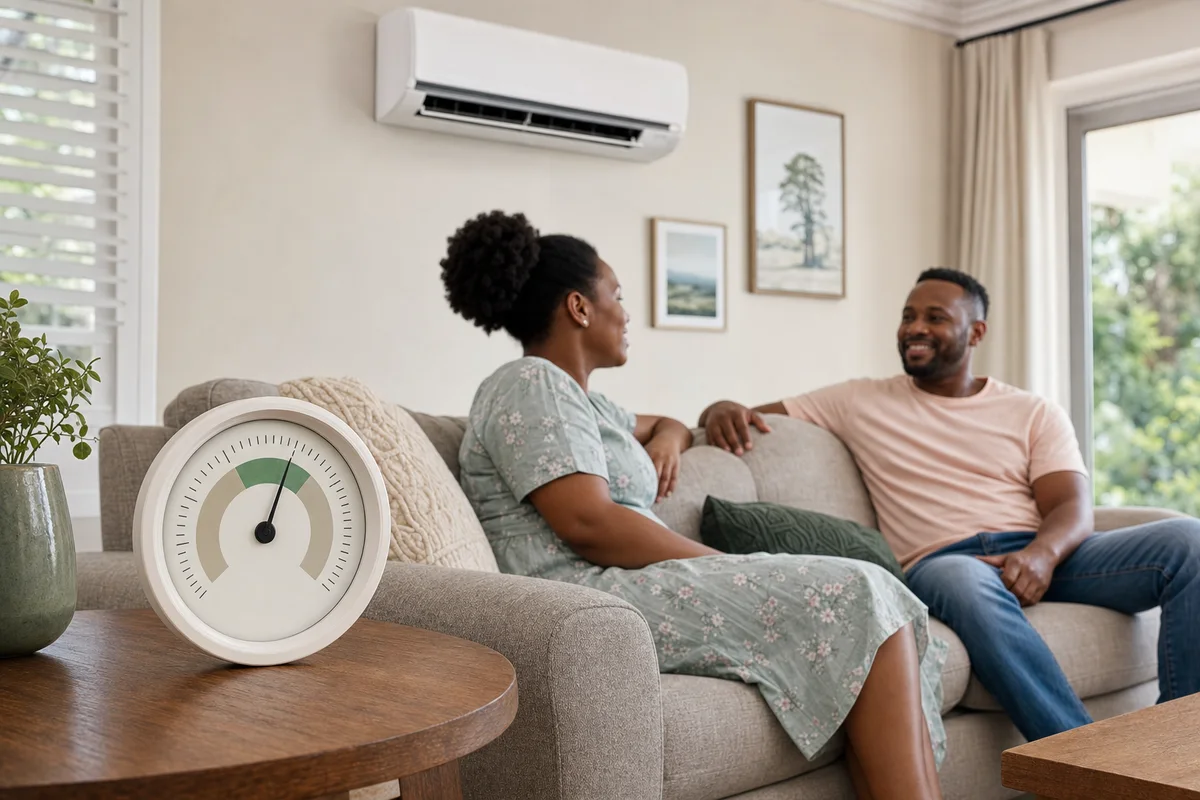
Run your unit to maintain a steady temperature rather than large swings. A realistic set point around 22-23°C prevents the compressor from cycling constantly. This reduces wear and lowers energy use over time.
Modern inverter models adjust compressor speed to match room demand. That means the compressor ramps up and down instead of switching on and off. The result is more even heating and cooling and improved efficiency.
Benefits of Inverter Technology
- Energy savings: Variable speed control cuts power draw during stable conditions.
- Compressor longevity: Fewer full starts reduces stress on the compressor and refrigerant flow systems.
- Consistent comfort: Units keep temperature steady and deliver air up to about 10°C cooler than ambient when required.
- Lower running costs: Targeting 22-23°C helps prevent non-stop compressor activity and trims monthly bills.
- Maintenance matters: Regular servicing keeps compressors and internal parts operating efficiently.
“Set realistic targets and service regularly to protect both comfort and the system’s lifespan.”
| Aspect | Why it helps | Practical check |
|---|---|---|
| Inverter compressor | Smooth speed control reduces starts and stops | Ask contractor if the unit varies speed under load |
| Set temperature | 22-23°C balances comfort and energy use | Use a programmable thermostat or timer |
| Service schedule | Maintains refrigerant flow and component health | Book inspection at least annually |
Health Benefits of Properly Maintained Systems
A well-serviced system makes a real difference to the quality of air you and your family breathe.
Filtration Systems for Cleaner Air
Clean filters trap dust, pollen, smoke and many microbes before they circulate in your rooms.
We recommend cleaning filters monthly to stop build‑up of dust and bacteria. That simple step reduces odours and keeps the air moving freely through the unit.
Humidity Control and Allergy Management
Maintaining humidity between 40% and 60% helps limit dust mites and mould growth. That range also eases symptoms for people with allergies.
Good conditioning with a dehumidify mode keeps temperature steady and lowers allergen growth inside the home.
Ventilation Standards for Indoor Environments
Mechanical ventilation in modern conditioners prevents stale pockets of air in tightly sealed houses. Proper ventilation reduces the risk of sick building syndrome.
Ensure vents and access panels are clear so the system can exchange fresh air with minimal energy loss.
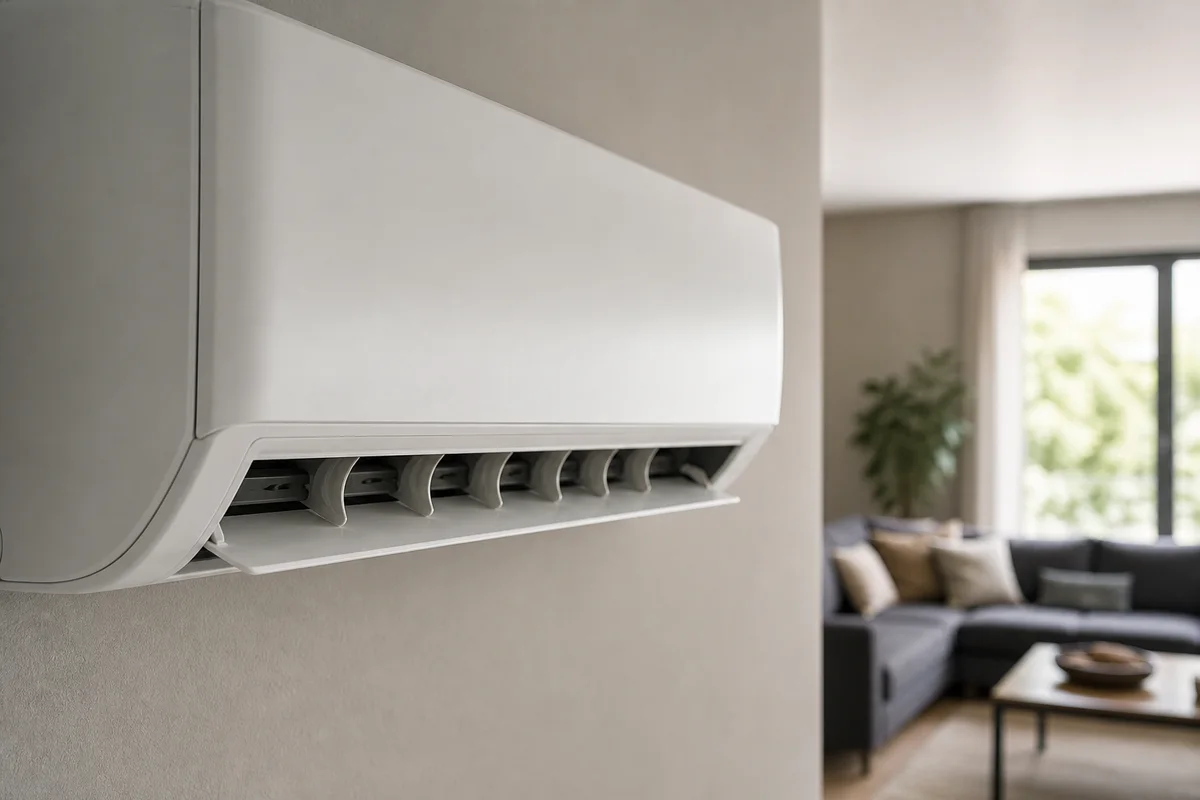
- Monthly filter cleaning prevents bacteria and mould spread.
- High-quality filtration captures particles from pollen to smoke.
- Controlled humidity reduces dust‑mite populations.
- Mechanical ventilation sustains a healthy indoor environment.
“A maintained system keeps your indoor air cleaner and more comfortable.”
| Feature | Health benefit | Quick action |
|---|---|---|
| Filter quality | Removes pollen, dust and microbes | Clean or replace monthly |
| Humidity control | Limits mould and dust mites | Keep 40-60% relative humidity |
| Ventilation | Prevents stale air and odours | Check vents and service annually |
| Regular servicing | Stops oversaturation and bacterial spread | Book inspections at least once a year |
What local service prices depend on
Service pricing in Johannesburg varies by suburb and by what the technician must inspect.
Local service fees in Sandton, Randburg, Roodepoort, Fourways, Midrand and the CBD/JHB South reflect the unit type, room size and the complexity of the fault.
Key cost drivers include access to the outdoor unit, BTU requirements for the room, whether refrigerant gas top‑up is needed, and the condition of the compressor.
Brand, parts availability and installation complexity also affect labour time and final price. Urgent call‑outs or after‑hours work add to cost.
- Engineers will check refrigerant levels, motor speed and electrical power if your air conditioner trips circuits or fails to cool.
- A proper assessment of room size and BTU needs helps produce an accurate quote for repairs or replacement units.
- Ask for a written breakdown showing parts, labour and any expected energy or efficiency improvements from the work.
“Request a professional assessment first - it prevents surprises and gives you a clear basis to compare quotes.”
Compare quotes for your property
Compare professional offers to find the right system size and energy profile for your rooms. Through our platform, airconditioning-johannesburg.co.za, you can request up to 3 quotes, or up to 5 where available, from independent contractors.
Our platform simplifies finding professional air conditioning installation and maintenance for your home or commercial property. When you get quotes, check the proposed unit size, efficiency ratings and heating or cooling capabilities for your environment.
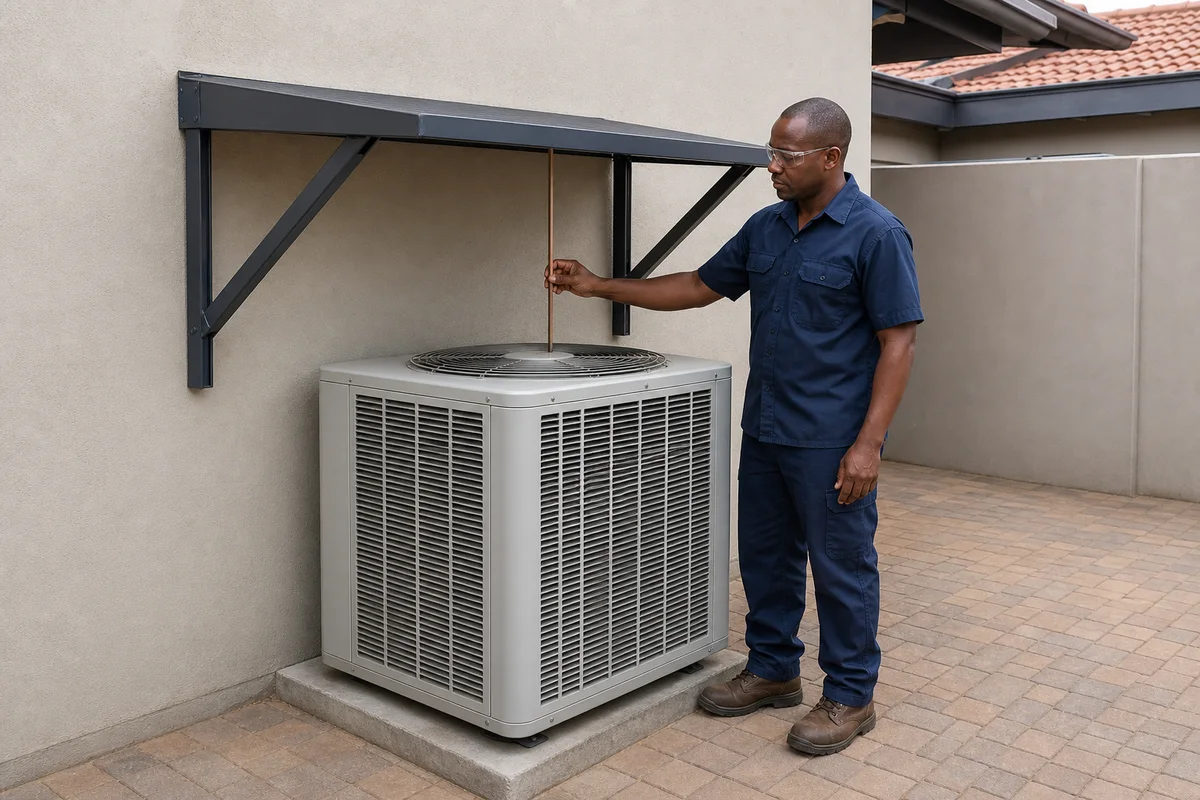
Always ask clear questions about installation steps, expected temperature performance and power needs. Preparing for summer is easier when you review multiple professional offers and compare written costs, parts and labour.
We do not perform the work ourselves. We connect you with local experts so you can choose a competitive price and a dependable installation for long‑term energy and comfort gains.
FAQ
What should I consider first when choosing an air conditioning unit for a Johannesburg home?
Start by assessing the room type, size and solar exposure. Consider ceiling height, insulation, glazing and how many people and appliances generate heat. These factors affect cooling load and the unit type you need - split, multi-split, ducted or portable. Also check access for installation and local energy tariffs to estimate running costs.
How do I calculate the correct unit size for my space?
Calculate the room’s area (length × width) and factor in ceiling height, sun-facing windows and occupancy. Use BTU guidelines: typical living rooms need more capacity than bedrooms. For precise sizing, include heat from appliances and choose a slightly higher capacity for rooms with strong sun. Request written sizing from installers before ordering.
What BTU requirements ensure optimal performance?
BTU needs vary by room and conditions. A rule of thumb is around 500 BTU per square metre for typical rooms, increasing for high ceilings or heavy sun. In Johannesburg’s climate, bedrooms often need less than open-plan lounges. Have an installer calculate exact BTU using room dimensions, insulation and orientation to avoid short-cycling or poor dehumidification.
How do I measure room dimensions and ceiling height correctly?
Measure length and width at floor level and note ceiling height. For loft or vaulted ceilings, measure the highest point. Record window sizes and their orientation (north, south, east, west) and note nearby heat sources like ovens or large TVs. Provide these details to quotes so contractors can size units accurately.
What are the benefits of inverter technology?
Inverter units modulate compressor speed to maintain steady temperature. That reduces power spikes, improves comfort, uses less energy over time and extends compressor life. Inverter systems also achieve desired temperatures faster and dehumidify more effectively than non-inverter models, which is useful during humid Johannesburg summers.
How often should I service my system to maximise efficiency?
Annual servicing is a minimum; twice yearly is sensible for busy or commercial systems. Regular checks include refrigerant levels, compressor performance, coil cleaning, filter replacement and electrical safety. Routine servicing keeps efficiency high, lowers energy use and helps prevent sudden breakdowns.
What filtration systems improve indoor air quality?
Look for units with multi-stage filtration: washable pre-filters, HEPA or fine-particle filters and activated carbon for odours. Some systems include ultraviolet lights to reduce microbial growth. Proper filtration reduces dust, pollen and particulates - important for homes and workplaces in urban areas.
How does humidity control help allergy management?
Effective humidity control keeps indoor relative humidity between 40-60%. That range reduces dust mite growth and mould spores, easing allergy and asthma symptoms. Air conditioning helps dehumidify, but correct sizing and regular drainage maintenance are essential to prevent damp or bacterial growth in the system.
What ventilation standards should I follow for indoor environments?
Provide adequate fresh-air exchange according to room use: living spaces and offices need higher air changes than storage areas. Mechanical ventilation or heat-recovery ventilators can supply fresh air without large energy losses. Follow South African building regulations and guidance for workplace ventilation where applicable.
What local factors influence service and installation costs in Johannesburg?
Costs depend on unit type, size, complexity of pipe runs, access to outdoor condensers, electrical upgrades, refrigerant type and labour rates. Extra work - such as removing an old unit, running ductwork, or installing new circuits - raises the price. Travel distance, brand parts and warranty terms also affect quotations.
How do I request and compare professional quotes for my property?
Ask for written quotes that list unit model, capacity (BTU/kW), energy rating, warranty, labour, parts, refrigerant type and timeline. Request up to three written quotes, or up to five where available, from independent installers. Compare components, service inclusions and post-install support rather than choosing on price alone.
What questions should I ask a contractor before installation?
Ask about their installation experience, permits, warranty on labour and parts, refrigerant handling and certification, timeline, access requirements and any electrical work needed. Request references and confirm they will provide a full written guarantee and a handover showing how to operate and maintain the system.
How do different refrigerants affect performance and environment?
Modern refrigerants (like R32) offer improved efficiency and lower global warming potential than older gases (R410A, R22). Choose systems using low-GWP refrigerants where possible and ensure certified technicians handle charging and disposal. Refrigerant choice influences efficiency, running costs and regulatory compliance.
What are common fault symptoms and quick checks I can do?
Common signs include reduced airflow, warm air, unusual noises, water leaks or higher energy bills. Check filters first, ensure outdoor unit is clear of debris, thermostat settings are correct and breakers haven’t tripped. For refrigerant or compressor faults, contact a qualified technician rather than attempting repairs yourself.
Can I install a system myself to save on costs?
DIY installation is not recommended. Incorrect installation risks poor performance, refrigerant leaks, voided warranty and electrical hazards. Use licensed installers who can size correctly, handle refrigerant, ensure safe mounting and comply with local regulations. A proper installation often saves money long term through better efficiency and fewer repairs.
How can I lower running costs without sacrificing comfort?
Improve insulation, use blinds or curtains on sun-facing windows, set thermostats sensibly, maintain filters and consider inverter units with good energy ratings. Use timers or smart thermostats to avoid cooling empty rooms and seal gaps around doors and windows to reduce heat ingress.
Ready to request quotes?
Submit a request and independent local air conditioning installers in Gauteng may respond with their availability and pricing. No obligation to accept any quote.
Request Free Quotes