12 min read
Quick answerEstimate running cost with power (kW) × hours × tariff (R/kWh). A 1.5 kW unit run for 3 hours at R3.00/kWh costs about R13.50 a day; an efficient inverter model can cut that by 30-50%.
The running cost of an aircon in South Africa comes down to three things: your electricity tariff, how many hours you run the unit, and how efficient it is. That surprises many owners who assume high prices without looking at any of them.
At airconditioning-johannesburg.co.za we help you see the factors that determine the running cost for an air conditioner in a typical Johannesburg property.
Your electricity tariff, the size of the room, and how often you cool it all change the figures. Modern units with higher energy ratings usually use less energy and keep long‑term costs down.
Understanding the variables - from unit type to home layout - lets you estimate what your system will add to the electricity bill. In suburbs like Sandton or Roodepoort, owners who plan carefully find the cost run quite manageable.
Read on for clear guidance on unit sizing, usage habits and simple steps to reduce running costs so you can keep a comfortable temperature without surprises.
Quick Facts & Key Takeaways
- Check the tariff on your latest electricity bill before you calculate - the rate drives the whole figure.
- Right-size the unit: an oversized aircon short-cycles and an undersized one runs flat out, both wasting energy - work out the size you need.
- Room size, insulation and setpoint drive daily use; sealing gaps and closing curtains cut the load before the unit compensates.
- Zoning - cooling only occupied rooms - and pairing with solar help contain bills as tariffs rise and load-shedding hits.
- Clean filters and coils and correct refrigerant keep the unit efficient; regular servicing protects running costs.
Table of contents
Table of contents12 min read
What actually drives your running cost
The biggest drivers of what you pay to cool a room are the unit itself and how efficiently it uses energy.
Age matters. Older air conditioners usually use more electricity than modern, high‑SEER units. A higher SEER rating means the system moves the same cooling with less energy, so monthly bills fall.
Use our platform to compare options and see realistic estimates for Sandton, Randburg and Roodepoort. Our quote process gives local comparisons so you can weigh upfront spend against long‑term savings.
- Compare contractors in Sandton, Randburg and Roodepoort via our transparent quote process.
- Whether you are in Fourways, Midrand or the CBD/JHB South, our platform links you to experts who know local climate demands.
- Regular servicing keeps a system efficient and helps lower running costs over time.
| Feature | Older unit | Modern high‑SEER unit | Typical outcome |
|---|---|---|---|
| Energy use | Higher | Lower | Lower bills with modern unit |
| Maintenance need | Frequent | Regular | Better reliability |
| Replacement payback | Long | Shorter | Savings accrue faster |
We help you compare the running cost of your current setup with upgrade scenarios. Request quotes, check SEER ratings and decide how much you want to invest to cut future bills.
How to work out your electricity use
Start by checking the power rating on your air conditioning unit. That kW number is the key to estimating how much electricity the unit uses.
The basic formula is straightforward: power (kW) × hours of use × tariff (R/kWh). This gives a direct figure you can compare across models or rooms.

The Formula Explained
Find the power input on the energy label or in the product specs. Multiply that value by the hours you run the system each day and by your local electricity price. The result is the cost per day for that unit.
Worked Examples
Example: a 1.5 kW air conditioner used for 3 hours at R3.00 per kWh.
- 1.5 kW × 3 hours = 4.5 kWh
- 4.5 kWh × R3.00 = R13.50 per day
This shows how power draw, time and tariff combine to affect your monthly bill. Outdoor temperature and room size will change how hard the unit works, so use this as a baseline when comparing models or setpoints.
| Item | Value | Result |
|---|---|---|
| Power (kW) | 1.5 | - |
| Daily hours | 3 | 4.5 kWh |
| Tariff (R/kWh) | R3.00 | R13.50 per day |
Tip: Check your latest electricity bill for an accurate tariff before you calculate. Our platform can then help you compare energy efficiency and expected prices across different air conditioners and room sizes.
What pushes daily energy use up
Room size and insulation set the baseline for how much energy you need each day to keep a comfortable temperature.
If a room is large or open‑plan, the system will use more power to reach the setpoint. An undersized air conditioner will run longer, so your kWh tally and daily electricity use rise.
Well‑insulated homes keep cool air in. That reduces heat gain and lets the conditioning system cycle less often. Proper sealing around windows and doors matters as much as roof and wall insulation.
The role of layout and hours
- The size of the space affects how many hours the system must run to cool it.
- Track daily hours and power draw in kWh to estimate energy and costs.
- High outside temperatures increase the load and raise daily electricity use.
Practical tip: Measure the floor area in square metres, check insulation, then match unit size to the room. We help you compare scenarios so you can reduce the load and lower the cost running air conditioning in your home.
Why inverters use less electricity
Modern inverter systems control compressor speed, cutting unnecessary power peaks and smoothing energy use. This means the unit ramps up or down to match demand rather than cycling fully on and off.
That variable speed is why inverter models use markedly less electricity. By avoiding repeated start-ups, they lower the initial power surge that traditional units need.
Independent measurements show inverter units can save roughly 30% to 50% in energy compared with fixed-speed models. The exact saving depends on room size, insulation and daily hours of use.
- Inverter models maintain a steady temperature by adjusting compressor speed, which reduces power consumption over time.
- Choose a system with a high energy efficiency ratio (EER) or energy efficiency rating to lower monthly electricity bills.
- In practice, these systems avoid the energy-intensive cycles that older conditioners rely on, improving comfort and reducing power draw during peaks.
Our platform explains how efficiency rating metrics translate into real-world savings for Johannesburg properties. Use the energy efficiency ratio when comparing units to balance upfront price with long‑term savings.
| Feature | Non-inverter unit | Inverter unit |
|---|---|---|
| Compressor behaviour | On/off cycling | Variable speed |
| Typical energy saving | - | 30%-50% |
| Comfort | Temperature swings | Steady temperature |
Simple habits that cut cooling costs
Choosing the right size unit and using simple habits will reduce energy use and improve comfort. This section covers how to match a unit to room size, pick sensible setpoints and use zoning to cool only the areas you need.
Right-sizing your unit
Fit a unit to the exact room size to avoid short cycling and wasted energy. An oversized unit cools too quickly and then stops, while an undersized one runs continuously.
Tip: Have installers calculate heat load for bedrooms and living areas so the selected unit suits the space and local weather.
Managing setpoints
Set temperature between 18-21°C for comfort with good efficiency. Small changes of 1°C can alter energy use over time.
Keep doors and windows closed so the system reaches the setpoint faster and draws less power.
Zoning strategies
Cool individual rooms as needed rather than the whole house. Zoning saves energy and lowers running costs when you focus on occupied spaces.
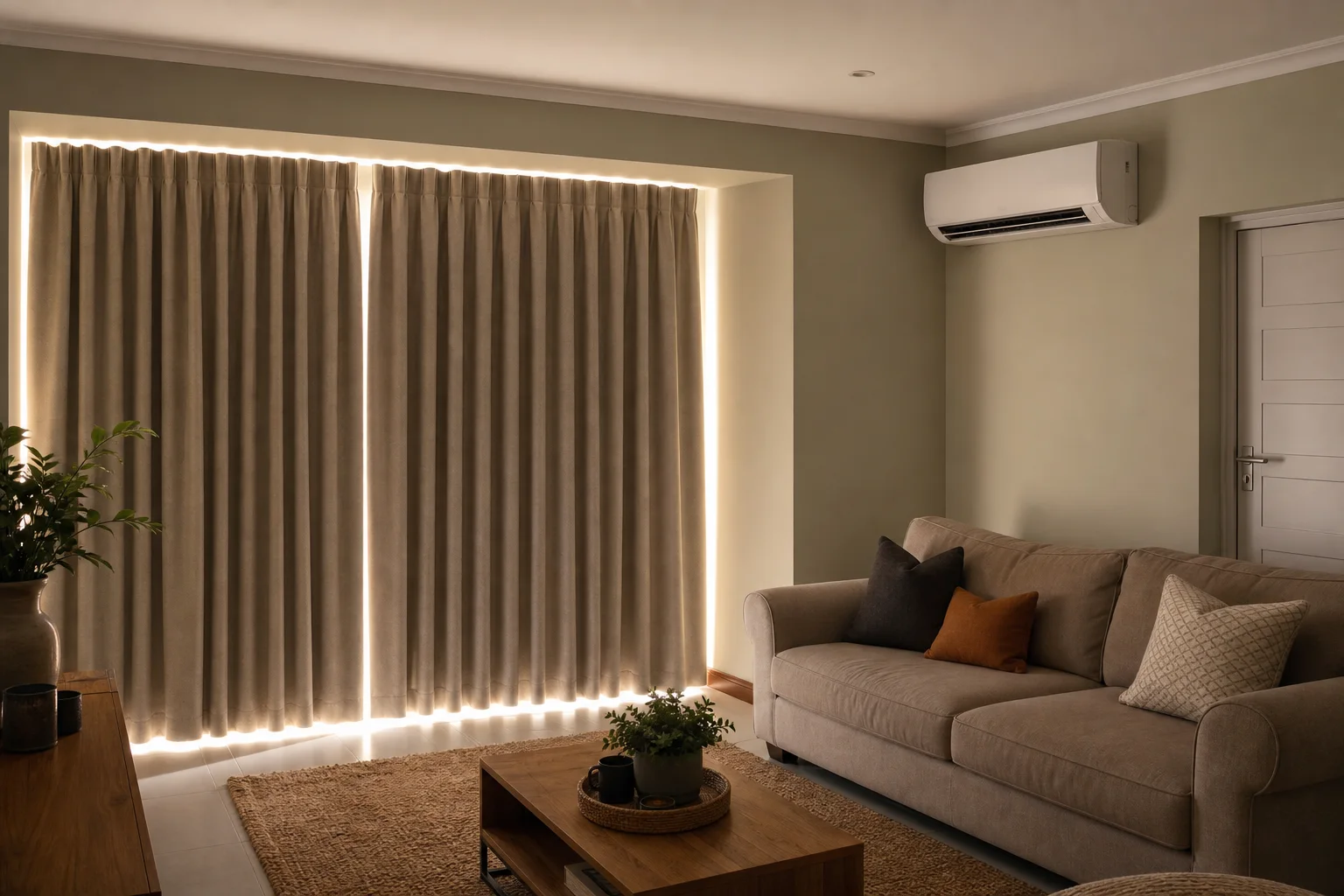
- Use curtains and insulation to reduce heat gain from direct sun.
- Clean filters regularly to maintain airflow and efficiency.
- Our platform encourages these behavioural changes and helps you compare efficiency rating and energy efficiency ratio when selecting units.
Rising tariffs and load shedding
When electricity prices climb and outages occur, efficient cooling becomes a practical priority for households in Johannesburg and beyond.
Rising tariffs mean that every kWh saved on your air conditioning bill increases monthly savings. Small changes to setpoints and better insulation add up over a day and a month.
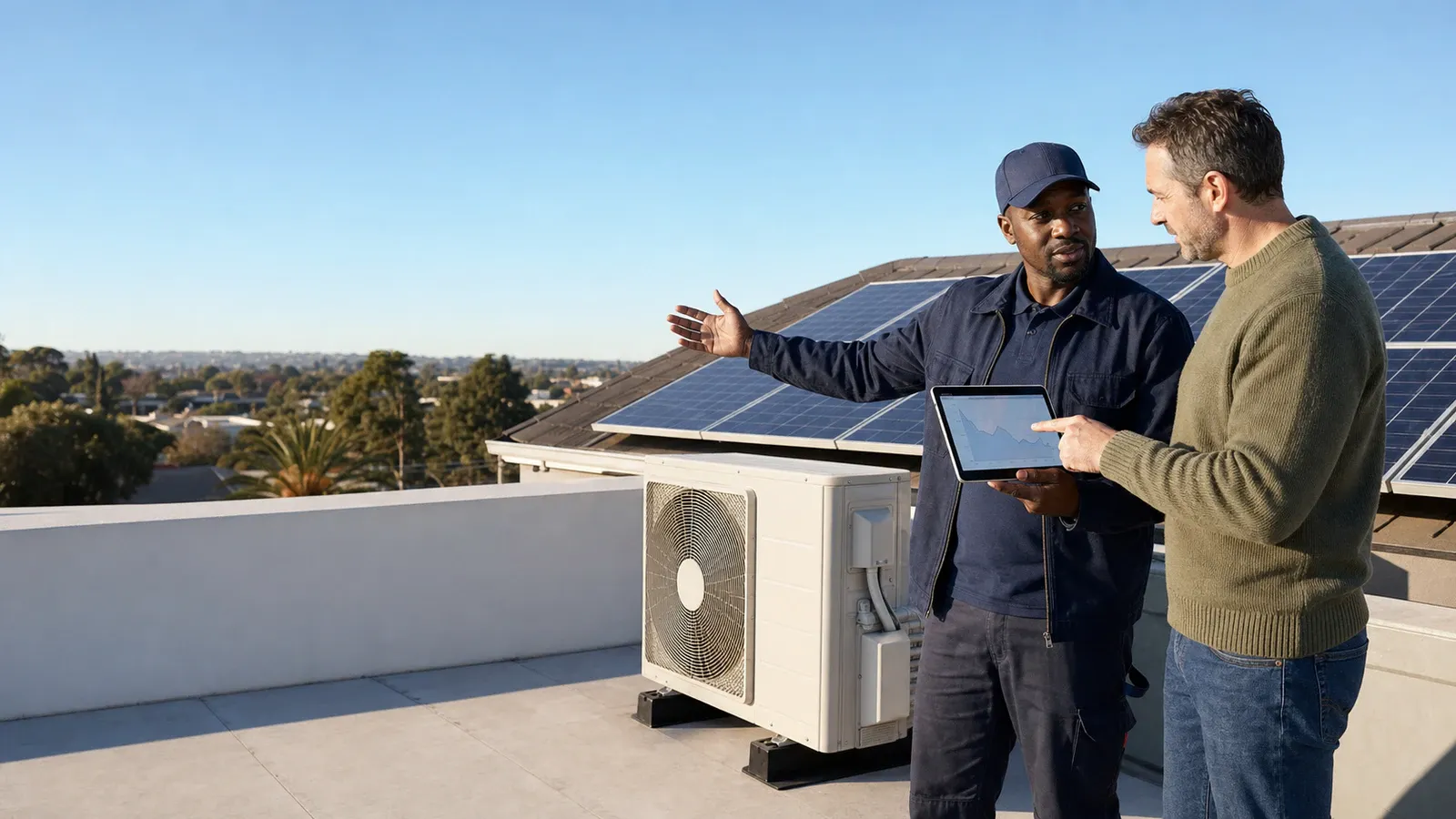
Many homeowners now pair their cooling system with solar to mitigate load‑shedding and high electricity prices. Solar paired with a battery can let you run essential units during an outage and reduce reliance on the grid.
- Rising electricity tariffs make energy efficiency more important than ever.
- Solar integration helps you run air conditioning during load‑shedding and lowers grid use.
- Manage your energy use daily to protect your household budget from higher bills.
Our platform explains how to adapt cooling habits to local schedules and how unit choice, room size and solar pairing affect long‑term price per kWh. This helps you decide which system best suits your needs, whether you live in the CBD or the suburbs.
How servicing keeps costs down
Simple checks - filters, coils and refrigerant levels - have a big effect on how well your unit cools a room. A well‑maintained air conditioner keeps airflow steady and prevents the compressor from working harder than necessary.
Accumulated dust on coils blocks air movement. That forces the conditioning unit to run longer and increases energy use.
Regular servicing, including filter cleaning and leak checks, restores efficiency and reduces running costs. A properly gassed air conditioning unit reaches set temperatures faster and uses less power over time.

- Annual maintenance checks refrigerant levels, seals and correct sizing for your insulation and room size.
- Clean filters improve airflow and are an easy, low‑cost task you can do yourself.
- Professional checks spot leaks or worn parts before they cause costly failures.
Our platform links you to local contractors who can service systems across Johannesburg. Regular care extends the life of conditioners, lowers energy bills and gives you peace of mind during the hot summer months.
Your next move on cooling costs
A clear review of your air use and typical kwh per day points you to sensible choices for Johannesburg homes.
Compare how a modern air conditioner unit performs versus your current unit. Look at energy and electricity figures, then judge the likely effect on your monthly bill and the price of any upgrade.

Our platform lets you request up to 3 quotes, or up to 5 where available, from independent contractors. Whether you seek a new inverter aircon or advice on your current conditioning setup, we connect you to local help.
Start with a professional assessment so the chosen system suits room size and cooling needs. Visit our site to begin and take control of home comfort this summer.
FAQ
What does an aircon cost to run in South Africa?
Running a split or portable unit varies by size, efficiency and hours used. Estimate by multiplying the unit’s kilowatt (kW) input by local electricity tariff (R/kWh) and hours of use. A small, efficient inverter unit in a well-insulated room will use far less energy than an oversized, old fixed‑speed model. Request local quotes for more accurate daily or monthly figures.
How do I understand my aircon running cost?
Look at three things: the unit’s power draw (kW), its energy efficiency rating (EER or SEER) and how many hours you run it each day. Also factor in room size, insulation quality, window shading and the set temperature. Keep usage logs for a week to get a realistic average before projecting monthly bills.
What formula is used to calculate electricity consumption?
Multiply the unit’s kW input by hours of operation to get kWh. Then multiply kWh by your electricity tariff (R/kWh). For example: kW × hours = kWh; kWh × R/kWh = cost. For inverter machines, use average running power rather than peak start‑up power.
Can you provide worked examples?
Yes. For instance, a 1.5 kW input unit running 8 hours at 2.50 R/kWh uses 12 kWh and costs 30 R/day. An energy‑efficient inverter might average 0.9 kW under the same conditions: 0.9 × 8 = 7.2 kWh, costing 18 R/day. These simple examples show how efficiency and run‑hours change the bill.
How do room size and insulation affect daily energy usage?
Larger rooms and poor insulation increase cooling load, so the system runs longer and draws more energy. Good insulation, double glazing or reflective window films reduce heat gain. Measure room volume, note sun exposure and check roof/ceiling insulation when sizing a unit.
Why does inverter technology change efficiency?
Inverter systems vary compressor speed to match demand, avoiding frequent on/off cycles. That reduces average power draw and improves comfort by maintaining steady temperature, which usually lowers electricity use compared with fixed‑speed units.
How do I right‑size my unit for a room?
Use room area, ceiling height and heat gains from people, appliances and windows to calculate required cooling capacity (kW or BTU). Oversized units short‑cycle and waste energy; undersized units run continuously and struggle to reach setpoint. Ask contractors for a room-by-room load calculation.
What setpoint should I use to balance comfort and energy use?
Aim for a modest temperature difference from outside. In South Africa, a setpoint around 23-25°C often balances comfort and efficiency. Each degree lower can raise electricity use noticeably. Use fans and shading to help maintain comfort without lowering the thermostat.
What zoning strategies cut energy use?
Close doors to unused rooms, use multiple smaller units or a multi‑split system to cool occupied areas only, and install programmable thermostats or timers. Zoning reduces run‑hours and keeps conditioning focused where you need it.
How does the South African energy context affect running bills?
Variable tariffs, load‑shedding and time‑of‑use pricing influence operating cost and practicality. Higher peak rates make off‑peak cooling and thermal storage strategies more attractive. Consider tariff type when planning run‑hours and consulting contractors.
Why is regular servicing important for controlling costs?
Servicing keeps filters clean, refrigerant at correct levels and fans running efficiently. Poorly maintained systems lose efficiency, increase power draw and risk breakdowns. Annual or biannual service reduces unexpected bills and extends equipment life.
What are the next steps to improve cooling efficiency in my home?
Check insulation, seal draughts, fit shading or reflective film, choose an appropriately sized inverter unit, set practical thermostats and arrange a professional load calculation and service. You can request up to three quotes from independent Johannesburg contractors to compare sizing, parts, labour and warranties.
Ready to request quotes?
Submit a request and independent local air conditioning installers in Gauteng may respond with their availability and pricing. No obligation to accept any quote.
Request Free Quotes