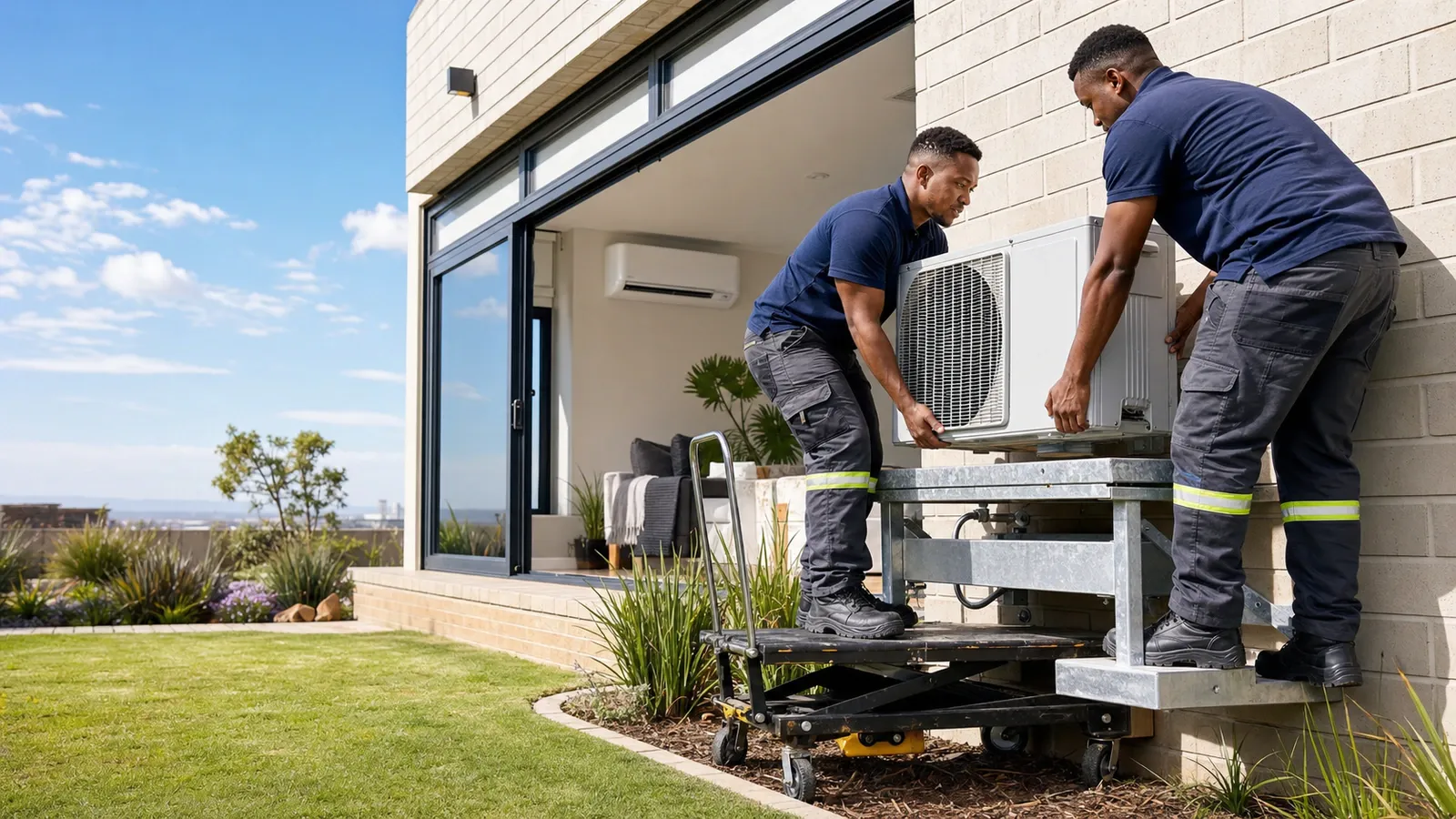
Aircon Installation Johannesburg
Compare quotes from independent Johannesburg technicians for correctly sized aircon installation.
Independent quote comparison across Gauteng

Free. No sign-up. No obligation to accept any quote.

20 min read
Quick answerCommercial aircon in Johannesburg usually means choosing between cassette, ducted and VRF systems to suit your building’s layout, occupancy and service access. The right pick balances running cost, energy use and reliability. Our platform connects you with independent contractors for up to five quotes.
Commercial and office air conditioning in Johannesburg has to balance running cost, energy use and reliability across cassette, ducted and VRF systems, and the right choice depends on your building’s layout and occupancy.
If you manage a property in Sandton, Randburg, Roodepoort, Fourways, Midrand or the Johannesburg CBD, finding the right cooling partner need not be hard.
Our platform, airconditioning-johannesburg.co.za, connects you with independent local experts so you can compare choices quickly.
Visit airconditioning-johannesburg.co.za to request up to five quotes from independent contractors and compare commercial aircon prices for unit type, room size, energy use and warranty terms.
We help you shortlist a reliable company without doing the installation work ourselves. Use the site to review the wider aircon services on offer, clarify servicing needs and request a quote today.
Table of contents
Understanding when and where heat builds up in your premises is the first step to better cooling. Start by mapping daily occupancy, equipment loads and sunlight on key façades. This reveals true thermal demand and the hours you must run systems.
Plan with purpose:
When you request a quote, ensure it lists unit type, room size, expected energy use and warranty terms. Proper planning keeps systems effective as seasons change and helps protect staff productivity.

Small upgrades matter: improved vents, scheduled servicing and correct set‑points can improve conditioning performance. Choosing the right partner gives you clear actions and expert guidance to keep air conditioning running efficiently year‑round.
Measure floor area and ceiling height to understand the true cooling demand.
Assessing room size is the starting point when choosing an air conditioner. To work out the capacity you need, standard practice links room dimensions to BTU output per square metre.
Correct sizing stops the system from overworking. An undersized unit struggles and uses more energy. An oversized unit cycles too fast and reduces dehumidification.
Simple checklist:
Windows, lights and heavy servers add heat and change cooling needs. Mapping these sources clarifies how many units you need and where.
Professional assessments give a precise cooling load. This ensures the chosen air conditioning approach matches operational needs and keeps staff comfortable.
| Space type | Typical sizing rule | Notes |
|---|---|---|
| Open-plan office | 150-200 W/m² | Higher loads near windows and printer zones |
| Server / equipment room | 300-400 W/m² | Continuous cooling and redundancy advised |
| Meeting room | 120-180 W/m² | Consider occupancy peaks and AV heat |
| Reception / lobby | 100-160 W/m² | Zoning helps with sporadic use |
Choose the right system by matching office layout, occupancy and service access to each technology’s strengths.
Best where ceiling space is limited. Cassette units sit inside a suspended ceiling and deliver four‑way air supply without visible bulk. They blend with interior design and suit open-plan offices with regular ceiling tiles.
They are easy to zone and control, but require ceiling void access for maintenance and condensate routing.
Use ducted systems for even coverage. A central unit and network of ducts provide consistent supply across large spaces or several rooms. Zoning dampers keep separate areas at different set points.
Ducted work well where you want minimal wall-mounted equipment and a tidy finish. Plan for service access to ducts and filters.
High efficiency for multi-zone buildings. Variable Refrigerant Flow lets you control many indoor units from one outdoor inverter. It suits large or phased installations and offers precise conditioning per zone.
VRF integrates with split air units and mixed system designs for flexibility and energy savings.
| Type | Strength | Typical use |
|---|---|---|
| Cassette | Discreet, good zoning | Office with suspended ceilings, small to mid open-plan |
| Ducted | Even supply, concealed | Large open-plan, multi-room suites |
| VRF | Efficient, flexible control | Large buildings, multi-zone setups |
When comparing units, ask contractors about split air compatibility, ventilation provision and lifecycle costs. We help you review written quotes so you can choose the best solutions for your workplace.
Project complexity - from ceiling access to refrigerant runs - drives the bulk of installation expense.
What typically appears on a written quote:
The total cost depends on the type of unit, building access and any bespoke work needed. Split air systems often need different fixings and piping compared with larger systems, and that changes labour and materials.
Energy efficiency matters. A higher efficiency unit can cost more to install but reduce monthly running bills. Think of installation cost as the first of several lifecycle expenses.
Always ask contractors to survey the site so they can issue an accurate quote that covers all access, duct or refrigerant runs and safety work. Correct installation preserves performance and helps ensure safe, long‑lasting conditioning for your workspace.
Glazing area and headcount are two of the clearest predictors of peak cooling requirements. Large windows and a full room spike internal gains, and that raises the demand on any installed system.
Account for glazing and occupancy early in the design or upgrade process. A good conditioning system will include allowances for solar gain and peak people loads. This ensures your units can cope during the hottest hours without overworking.
Place units to avoid direct sun on their casings and sensors. Direct sunlight increases the sensed temperature and forces the air conditioning to run harder.
“Manage heat loads and your equipment will perform reliably for longer.”
Proper management reduces wear and saves energy. Ask a qualified assessor to model peak loads so quotes reflect real needs and give you a tailored, efficient solution.
A site visit by a skilled assessor gives you clear, practical insight into what your workspace truly needs.
Professional assessments reduce uncertainty. A qualified team inspects room size, access, duct runs, electrical provision and likely fault symptoms.
Why this matters:
“A detailed assessment is the foundation of a reliable, efficient installation.”
Use our platform to connect with a reputable company that sends experienced assessors. Relying on a professional service helps ensure installations and maintenance meet industry standards.
| Assessment focus | Outcome | Practical note |
|---|---|---|
| Room size & layout | Correct unit type and capacity | Prevents oversizing or short cycling |
| Access & routing | Accurate labour and materials | Reduces on-site surprises |
| Energy and usage | Estimated running costs | Helps compare life-cycle value |
Request a quote and ask for a full written assessment to compare options clearly.
For safe refrigeration work, only use SAQCC Gas‑registered technicians. They are authorised to handle refrigerant and to certify that work meets legal requirements.
In South Africa, gas-related installation must follow strict rules to protect people and the environment. A certified technician ensures your air conditioning system is fitted correctly and safely.
“Only engage contractors who can show current SAQCC Gas registration and written confirmation of compliance.”
| Credential | Why it matters | What to ask for |
|---|---|---|
| SAQCC Gas card | Shows legal authorisation to work with refrigerant | Ask to see the card and registration number |
| Company insurance | Covers damage or injury during works | Request policy details and a valid certificate |
| Written compliance note | Confirms installation meets local rules | Require this with the final invoice |
| Service history | Demonstrates consistent quality and safe practice | Ask for previous job references or reports |
Verify credentials before you accept a quote. Properly certified technicians protect your people, property and long‑term conditioning performance.
A formal maintenance plan helps you track inspections, cleanings and any necessary repairs throughout the year. Experts advise regular aircon service and maintenance every three to six months to keep performance and hygiene on target. A steady schedule protects equipment and building fabric.
Preventative work catches faults early. Technicians check fans, controls, refrigerant pressures and electrical connections. Early fixes stop failures that interrupt business and cost more to repair.

Cleaning filters and coils preserves good air quality and system efficiency. Technicians also look for signs of water leaks that can cause serious damage to ceilings and walls if left unchecked.
“Proper servicing reduces risk, improves efficiency and protects your premises.”
Keeping your cooling systems online saves time and limits damage to your building. A well‑installed air conditioner and prompt service protect productivity and reduce costly interruptions to your work.
Plan maintenance to avoid disruption. Schedule visits in off‑peak hours so units are serviced without disturbing staff or clients.
When you need urgent repairs, we connect you with local companies that prioritise quick, safe work and clear written quotes. Ask for estimated downtime and parts lead times so you can plan around any service visit.
“Prioritise planned maintenance and a trusted installer to keep interruptions to a minimum.”
Choosing the right contractor sets the tone for a safe, efficient air conditioner installation.
Start by asking for a written quote that lists unit type, room size, expected energy use, parts, labour and warranty. This gives you a clear comparison between companies and avoids hidden costs.
Ask each contractor to confirm SAQCC Gas registration and whether they offer formal service plans; our guide on how to vet a technician explains what to check. Correct registration reduces risk and confirms legal compliance.
“A good contractor keeps you informed, respects access constraints and documents each stage of the installation.”
Choose a provider that pairs clear communication with reliable workmanship. That ensures your conditioner performs as designed and gives years of dependable cooling.
| What to check | Why it matters | Question to ask |
|---|---|---|
| Technician credentials | Ensures legal and safe refrigerant handling | Can you show SAQCC cards and insurance? |
| Written quote detail | Prevents surprise costs and scope drift | Does the quote list parts, labour and warranty? |
| Service offering | Supports long‑term performance and upkeep | Do you provide scheduled maintenance plans? |
| Local team experience | Faster response and better site knowledge | Have you done similar installations nearby? |
Choosing energy‑efficient solutions reduces running costs while keeping offices reliably cool during hot spells.
Modern energy-efficient air conditioning systems are designed to cut electricity consumption and still deliver steady comfort in the South African climate.
Investing in efficient units lowers monthly bills and eases strain on the power supply. A good system uses inverter technology and smart controls to manage heat without constant high power draw.
Long‑term value: the right choice supports staff comfort, keeps productivity steady and lowers carbon output over time.
We help you compare energy-saving options and find a system that matches room size, expected load and budget. Ask for written estimates that show expected energy use and lifecycle savings.
“Energy-smart upgrades are an investment in lower bills, better comfort and reduced environmental impact.”
A clear comparison begins when each contractor provides a detailed, itemised quote you can evaluate.
Start by requesting written proposals from several independent companies so you can check scope, parts and labour side by side. Use our platform to request a quote and collect comparable documents quickly.
When you review proposals, make sure the quote lists all installation services and materials. That prevents surprise costs for access work, fixings, piping or extra parts.

A professional company will explain each line in their quote and the reasoning behind recommendations. Ask them to note room size, unit type and likely running costs so you can compare life‑cycle value.
Request a quote today if you need options for a split air system. Comparing multiple quotes is the best way to secure quality installation services at a competitive price for your business.
“Compare itemised proposals - it saves money and time.”
Good ventilation design protects health, comfort and building fabric.
Maintaining indoor air quality starts with fresh supply and careful humidity control. In busy office spaces a well‑designed air conditioning system must bring in sufficient fresh air while removing excess heat and moisture.
Professional installation makes sure units and ventilation work together. Technicians balance supply rates, filter specification and duct routing so systems do not fight one another.
Key practical points:
“Ventilation is not optional - it’s part of the system that keeps people well and buildings sound.”
| Issue | Design response | Practical benefit |
|---|---|---|
| Stale or odorous air | Increase fresh air supply, upgrade filters | Improves comfort and perceived quality |
| High humidity | Adjust cooling control, add dehumidification | Prevents mould and water damage |
| Excess heat near glazing | Zone control, additional supply or shading | Reduces runtime and energy use |
Use our platform to request quotes from experts who assess ventilation, energy use and unit compatibility. A clear written proposal will list installation scope, filter types and expected running costs so you can compare solutions confidently.
A reliable lifecycle plan begins the day new equipment goes in and continues long after installation.
Correct design and a clear handover set realistic expectations for performance. Your choice of unit and how it is fitted influence how often it needs attention.
Ask a reputable contractor to map a commercial maintenance plan. Regular services spot wear and let you plan work before failures happen.
“A simple, documented plan extends useful life and reduces long-term cost.”
| Stage | Typical work | Responsible | Benefit |
|---|---|---|---|
| Initial handover | Operation briefing and checklist | Installing contractor | Correct start-up and warranty protection |
| Routine visits | Service, filters, leak checks | Maintenance company | Consistent efficiency and fewer breakdowns |
| Planned overhaul | Parts renewals and performance tune-up | Specialist team | Extended operational life |
| End-of-life review | Replacement planning and disposal | Trusted contractor | Cost-effective renewal decisions |
Use our platform to find local teams that specialise in long-term refrigeration care and ongoing service plans. Investing in lifecycle management protects your asset and reduces the chance of costly early replacement.
A formal service level agreement gives you certainty on scope, response times and ongoing maintenance obligations.
What a clear SLA should show:
These documents matter for managing refrigeration and other critical assets. A written agreement creates a single reference for future interactions and avoids misunderstandings about timeframes or responsibilities.

When you receive a quote, always ask the company to include a copy of their SLA. A reputable provider will be open about commitments and give contact points for rapid follow-up.
“Ask for a signed service level agreement with every quote so you can compare promises as well as price.”
Use our platform to find contractors who supply comprehensive SLAs. That way your business gets consistent support from a known team and clear terms that protect operations.
Secure the right cooling solution for your workspace with a few clear steps today.
Use our platform to request up to five quotes from independent contractors in Sandton, Randburg, Roodepoort, Fourways, Midrand and the CBD. Visit airconditioning-johannesburg.co.za to compare written proposals that list unit type, room size, expected energy use and installation scope.
Whether you need a split air system or a larger refrigeration solution, the right company will supply a clear quote and a written warranty. Most manufacturers offer 2-5 year warranties when accredited professionals handle installation.
Start at airconditioning-johannesburg.co.za and compare quotes to choose the best service, quality and long‑term value for your office.
Start with comfort and usage. Note the room size, typical occupancy, working hours and heat-producing equipment such as servers or kitchen appliances. These factors determine capacity needs, ventilation and whether split, cassette, ducted or VRF systems suit your space. Also check access for indoor and outdoor units and any ceiling or structural constraints before requesting quotes.
Measure floor area and ceiling height, then identify zones that use different temperatures. Account for glazing, orientation to the sun, insulation quality and internal heat gains from people and equipment. A qualified contractor will convert these into kilowatts (kW) or BTU recommendations and size units accordingly.
Typical thermal sources include direct sunlight through glazing, lighting, computers, kitchen appliances and high occupant density. External walls facing the sun and poor insulation add to loads. Identifying these helps select appropriate capacity and control strategies to avoid oversized or undersized systems.
Cassette units are good for open-plan areas where discreet ceiling mounting and 360° airflow are beneficial. Ducted systems suit multiple rooms or offices where centralised distribution and concealed outlets are preferred. Ducted setups often need more ceiling space and careful design to balance rooms evenly.
Variable Refrigerant Flow (VRF) systems work well for multi-zone buildings with varying loads. Like a multi-split system, they run several indoor units from one outdoor condensing unit, but scale up for precise control per zone across a large building. They require experienced designers and installers and are often chosen for office complexes and refurbished buildings.
Costs depend on unit type and capacity, number of indoor units, pipe and duct runs, labour access, structural modifications, electrical upgrades and required controls. Specialist work such as refrigeration brazing, roof supports or ventilation ducts increases time and cost. Always get detailed line-item quotes.
South-facing glazing and large windows boost solar gains. Use solar control films, blinds or shading to reduce load. High occupancy needs increased fresh-air ventilation and higher cooling capacity. Contractors should include these in the load calculation and recommend control options that limit energy waste.
Professionals measure loads, check electrical supply and site access, confirm refrigerant and gas safety requirements and design efficient ducting or piping. They prevent common errors like oversizing, poor airflow and inadequate condensate routing that lead to performance issues and higher lifecycle costs.
SAQCC Gas accreditation ensures technicians are certified to handle refrigerants and pressure-containing components safely. Choose contractors who follow South African refrigerant and gas regulations, provide correct charging, leak testing and certification to meet legal and insurance standards.
Most commercial systems benefit from at least two planned services a year - typically at the start of summer and winter. High-use or dusty environments may need quarterly checks. Preventative servicing reduces breakdown risk, maintains capacity and prolongs compressor life.
Servicing should include cleaning or replacing filters, vacuuming and degreasing coils, inspecting condenser fins, checking condensate drains and testing controls and safety devices. Clean filters and coils improve airflow and efficiency, lowering running costs and minimising downtime.
Plan work outside peak business hours, stage installations in sections, keep spare units where possible and agree a clear timeline with the contractor. Ensure electrical and access arrangements are ready before work starts to avoid delays.
Check SAQCC accreditation, trade references, experience with similar buildings, written warranties, and clear, itemised quotes. Confirm they supply and install the specified brands and can provide maintenance plans and emergency response times.
Efficient systems lower running costs, reduce carbon footprint and often have better humidity control and quieter operation. Look for high SEER/EER ratings, variable-speed compressors and smart controls to optimise performance and deliver long-term savings.
Compare unit models, capacity ratings, detailed scope of work, inclusions for labour and materials, warranty terms, lead times and conditions for extra costs. Ask for references and clarification on any vague items. Our platform allows you to request up to three quotes, or up to five where available, from independent contractors.
Combine adequate fresh-air intake with mechanical ventilation where required, use quality filters (MERV-rated or similar), consider heat recovery ventilation for energy savings and maintain humidity within comfort ranges. Regular filter replacement and coil cleaning keep indoor air healthier.
Include scheduled maintenance, performance checks, refrigerant leak testing, timely part replacements and logic for staged upgrades. Track energy use and service history to decide when repair becomes less economical than replacement.
An SLA should state response and repair times, scope of covered work, routine maintenance intervals, parts and labour policies, escalation procedures and liabilities. Ensure the document is signed and that emergency contact details and pricing terms are clear.
Confirm contractor insurance and workmanship guarantees, secure written quotes and a signed contract, lock down access points during installation and request commissioning reports and refrigerant certificates on completion. Keep all paperwork for warranties and future maintenance.
Installation choices
Model availability varies by provider.



At a glance
Pricing depends on scope, prep work and access. Submit a request to get indicative figures from independent local air conditioning installers.
Request Free QuotesRelated services
Compare quotes from independent Johannesburg technicians for correctly sized aircon installation.

Compare quotes from independent Johannesburg technicians for aircon regas, leak detection and refrigerant top-ups.

Compare written quotes from independent aircon repair technicians across Johannesburg.
Submit your request and independent local air conditioning installers in Gauteng may respond with their availability and pricing. No obligation to accept any quote.
Air Conditioning Johannesburg uses essential cookies to run the site and, with your consent, anonymous analytics to improve it. See our Cookie Policy.